The graph records what you explained and connected.
01 · Learning loop
Recognition is
not recall.
MoaLLM begins by withholding the polished answer. A session asks the learner to reconstruct an idea, teach it to simulated pupils with different misunderstandings, solve or write from memory, and produce the canonical note. The agent enters after an attempt has created useful evidence.
Read or watch with a concrete concept in scope.
Reconstruct the idea before receiving a fluent answer.
Adapt the explanation to different prerequisites and goals.
Questions target what the first explanation did not support.
Work a problem or write without copying the source.
The physical attempt becomes the artifact to inspect.
The agent transcribes, critiques, and points to omissions.
The learner finishes the note and links it into the graph.
02 · Design rule
Keep authorship
with the learner.
The most important boundary is also the simplest: agent dialogue is not canonical knowledge. The agent can transcribe a supplied attempt, report contradictions and omissions, validate Markdown and links, and suggest graph neighbors. It does not replace the learner's work with polished generated prose.
Canonical provenance
The learner authors the note.
Session records keep coaching and simulated-pupil dialogue separate. Only the learner-distilled concept enters the searchable graph, preserving the difference between material encountered and understanding demonstrated.
03 · Adversarial classroom
Make the idea
survive a pupil.
Simulated pupils rotate through different prerequisites, goals, and misconceptions. One pupil speaks at a time. The learner diagnoses the misunderstanding, adapts the explanation, and checks a new example. Their success is a classroom signal that exercises explanation, not a grade or a claim about measured retention.
Missing prerequisites
Can the learner supply the hidden foundation without drowning the explanation?
Tests the mechanism
Can the learner explain why a method works instead of repeating its steps?
Changes the example
Can the concept survive a new context rather than a memorized prompt?
04 · Agent infrastructure
A bridge with
delivery semantics.
An external agent reaches the Obsidian studio through six narrow MCP tools: open a session, publish, ask, wait for a reply, acknowledge the exact reply, and end the session. Authenticated loopback transport, session capabilities, request fingerprints, and idempotent retries prevent the interface from becoming arbitrary vault or filesystem access.
A reply has a lifecycle
QueuedThe learner answered before the agent polled. The reply remains available.
CollectedThe wait tool returns the exact reply ID through cancellation-aware polling.
AcknowledgedThe agent confirms receipt. Acknowledgement means delivery, not comprehension.
Retries reuse request identities, so a transport failure returns the existing message instead of duplicating it in the learner's interface.
05 · Search
Retrieval is
evidence.
Programmatic search supports the workspace; it does not stand in for the learner's unaided recall. Local full-text BM25 and a 384-dimensional vector index retrieve complementary candidates, then reciprocal-rank fusion combines their rank positions. Embeddings are cached by content hash so unchanged chunks do not get recomputed.
BM25Exact terms and useful snippets
+
Vector ANNSemantic neighbors in 384 dimensions
→
RRFRank-based fusion without fragile score scaling
06 · Knowledge graph
A galaxy earned
through writing.
The graph is the end result of authored notes and meaningful links. Topic hubs expose structure; reciprocal links keep relationships traversable; bridge concepts connect distant areas; graph-health checks surface orphans, missing prerequisites, and weakly connected regions.
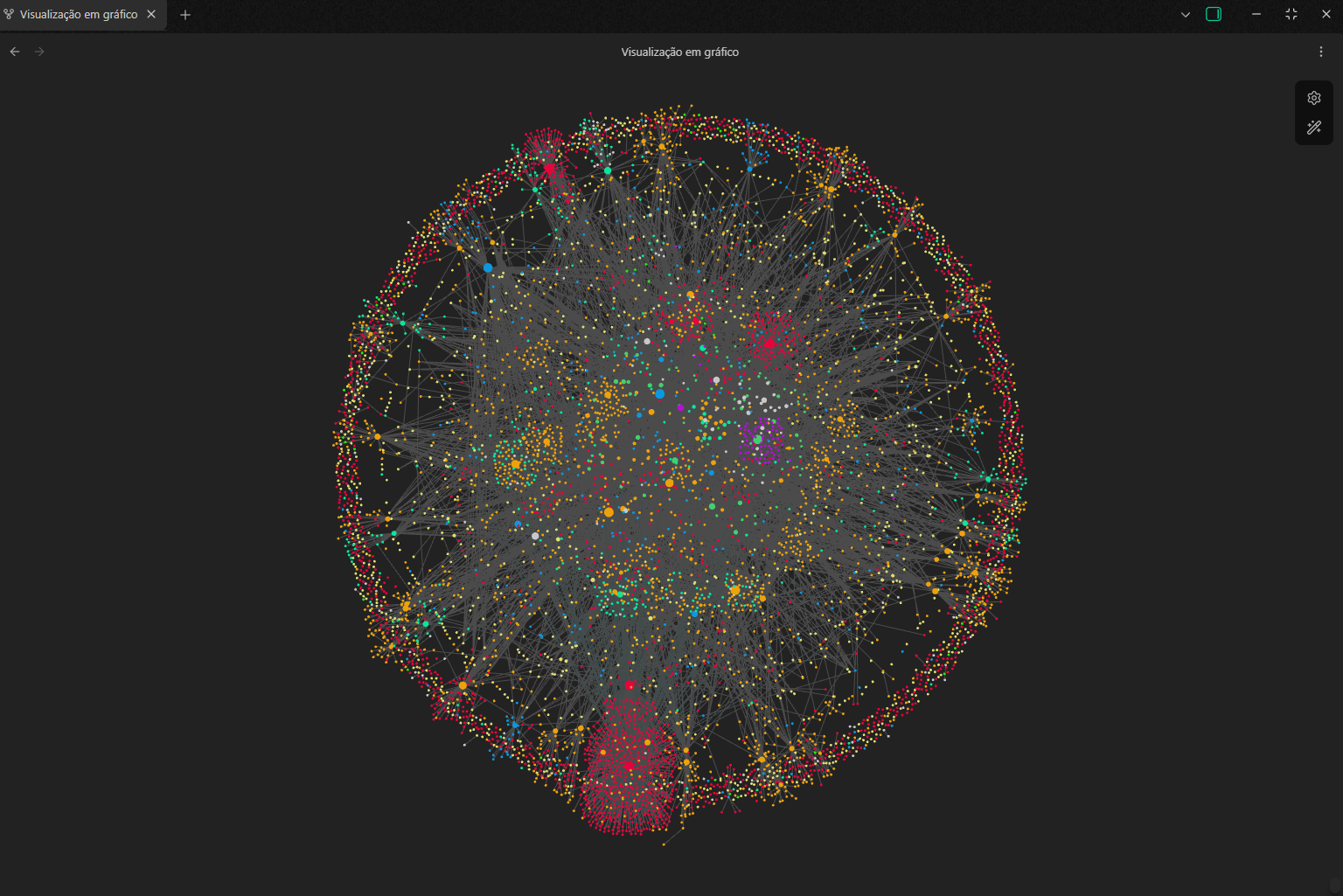
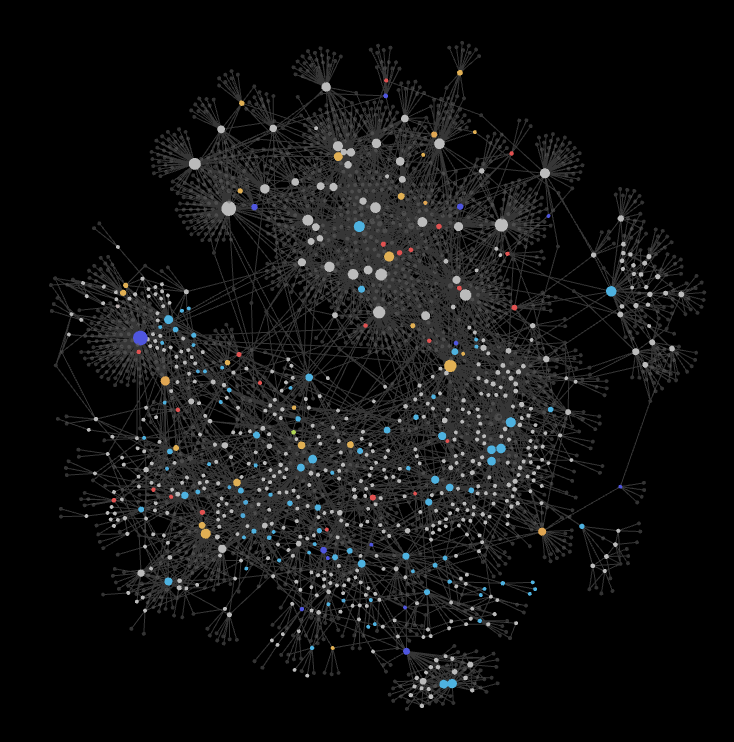
A connection should remain understandable from either direction.
Collections organize concepts without forcing every note into one hierarchy.
Cross-topic links reveal where one mental model supports another.
07 · System depth
Protocol, transport,
and knowledge.
MoaLLM is more than a graph view. Its value comes from the agreement between the learning protocol, the bridge’s delivery guarantees, the retrieval index, and the vault rules that preserve learner authorship.
Explain · teach · write
Structured message kinds separate questions, attempts, coaching, readbacks, and introductions.
Publish · wait · acknowledge
IDs, fingerprints, queued replies, cancellation, and acknowledgement keep the external agent reliable.
Search · validate · connect
Hybrid retrieval finds evidence while graph rules protect the canonical, learner-authored note.