Find the table and its cells
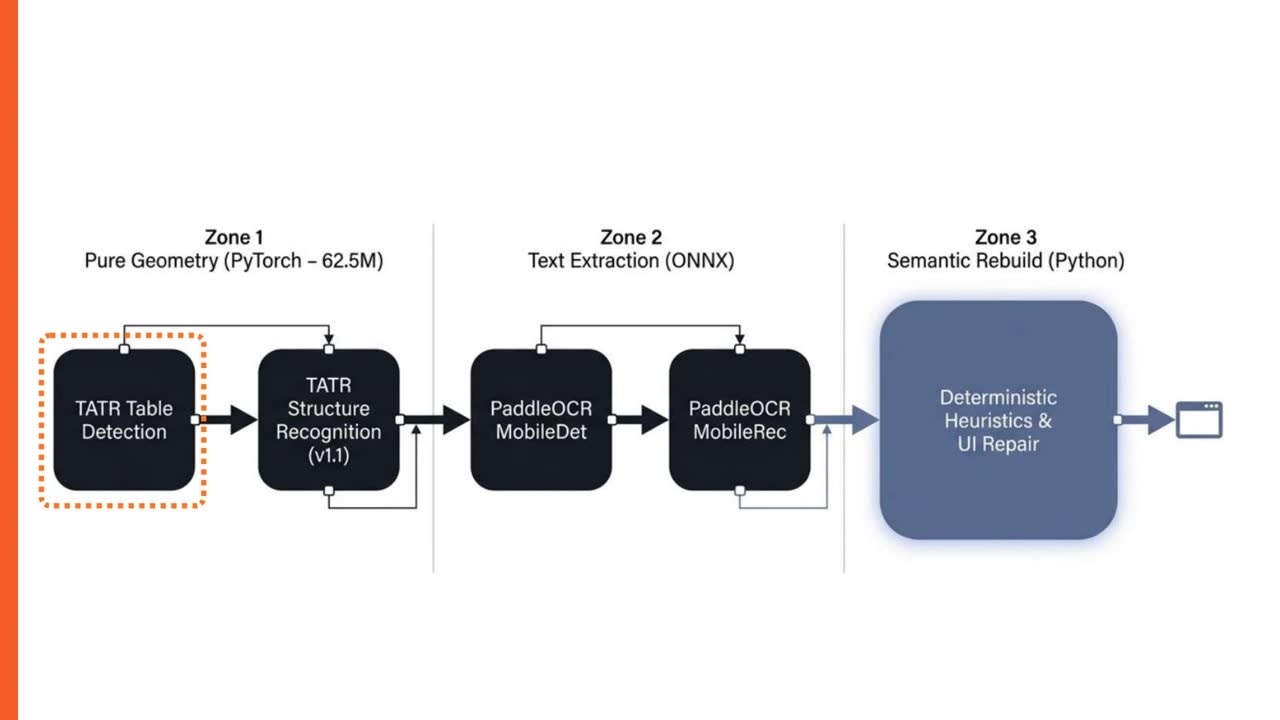
PyTorch models see layout and structure while preserving the coordinates needed downstream.
TATR TD→TATR TSR v1.1
1st place · STP MACHATHON 7.0 · document AI
A document goes in. A table you can actually edit comes out. I built the extraction pipeline, the data-engineering experiments, the repair tools, and the correction studio behind it.
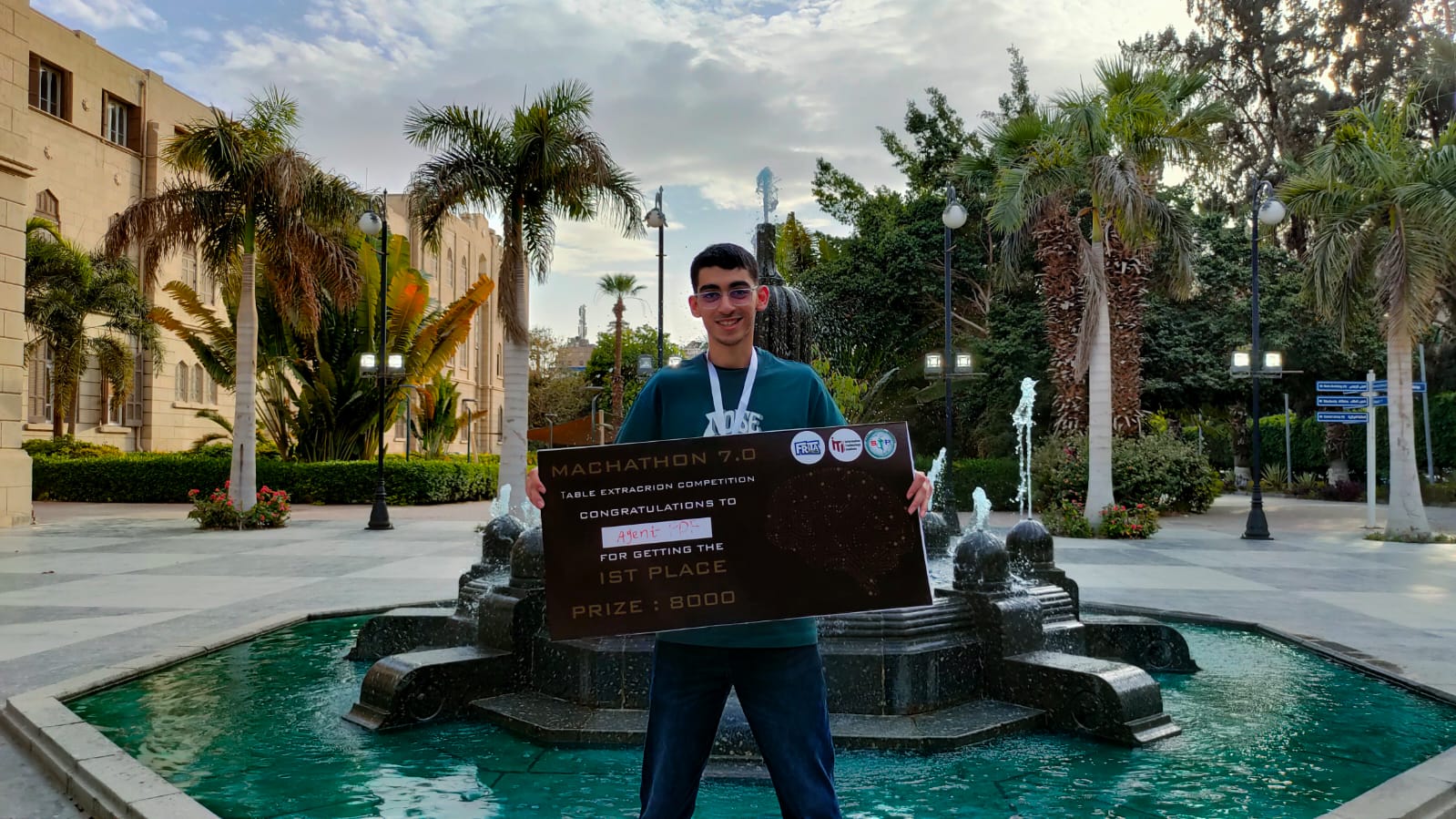
The competition result belongs to the system shown on this page: 62.5M parameters across the shipped geometry track, hard-negative training, annotation repair, deterministic reconstruction, and the correction studio.
01 · System shape
Agent P-DF separates visual geometry, text extraction, and semantic reconstruction so each part can be inspected, benchmarked, and repaired independently.
PyTorch models see layout and structure while preserving the coordinates needed downstream.
Fast ONNX inference turns OCR boxes into text lines without coupling recognition to the structure model.
Deterministic assignment, row rebuilding, heuristics, and the studio resolve the residual ambiguity.
02 · Model and data decisions
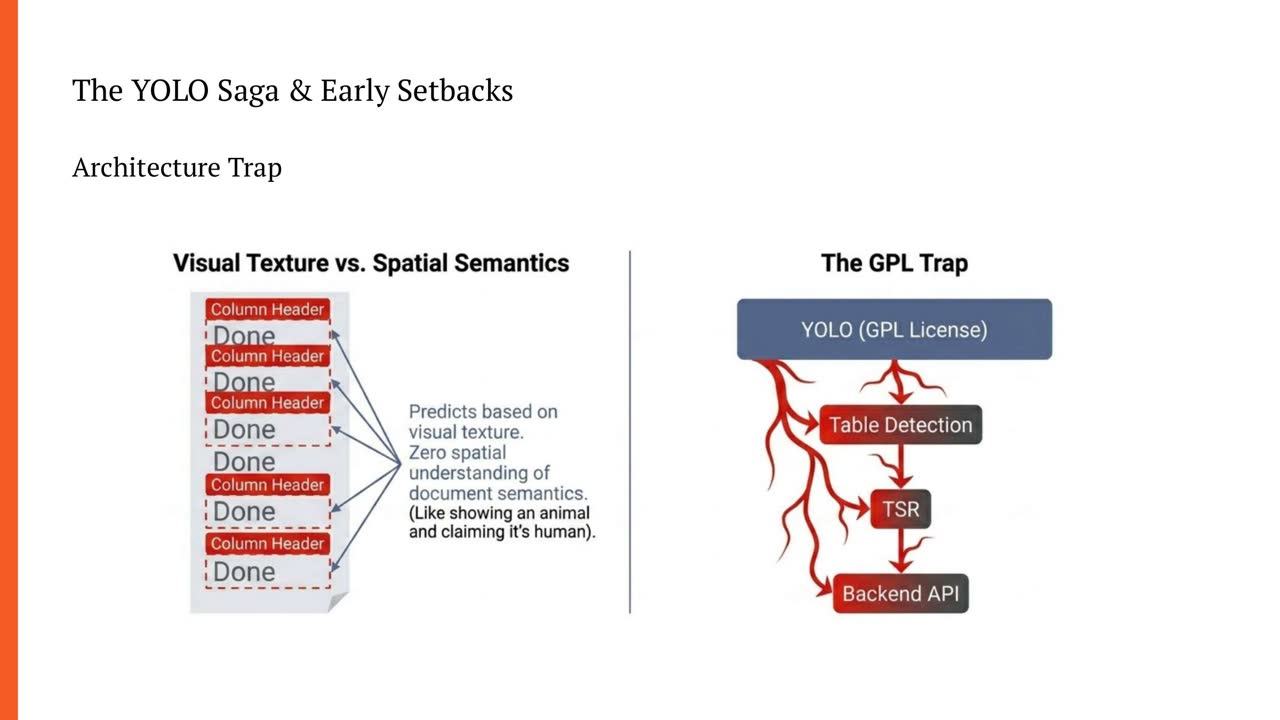
Early experiments made the choice clear. YOLO learned visual texture instead of document boundaries and introduced an unsuitable licensing constraint. The solution was a DETR-family geometry track plus data designed around the mistakes production documents actually make.
Fast baseline; boxes words and texture as if they were tables.
Beautiful public tables produce confident false positives.
LaTeX-generated near-tables force aggressive rejection.
Clean and noisy samples are weighted together to resist forgetting.
TATR geometry, ONNX OCR, and deterministic post-processing ship together.
Sanitized-only training reached an attractive AP 0.93 while hallucinating tables on non-tables. Adversarial mixing settled around AP 0.89 with the false-positive behavior needed in production. The model learned that “not a table” is a first-class answer.
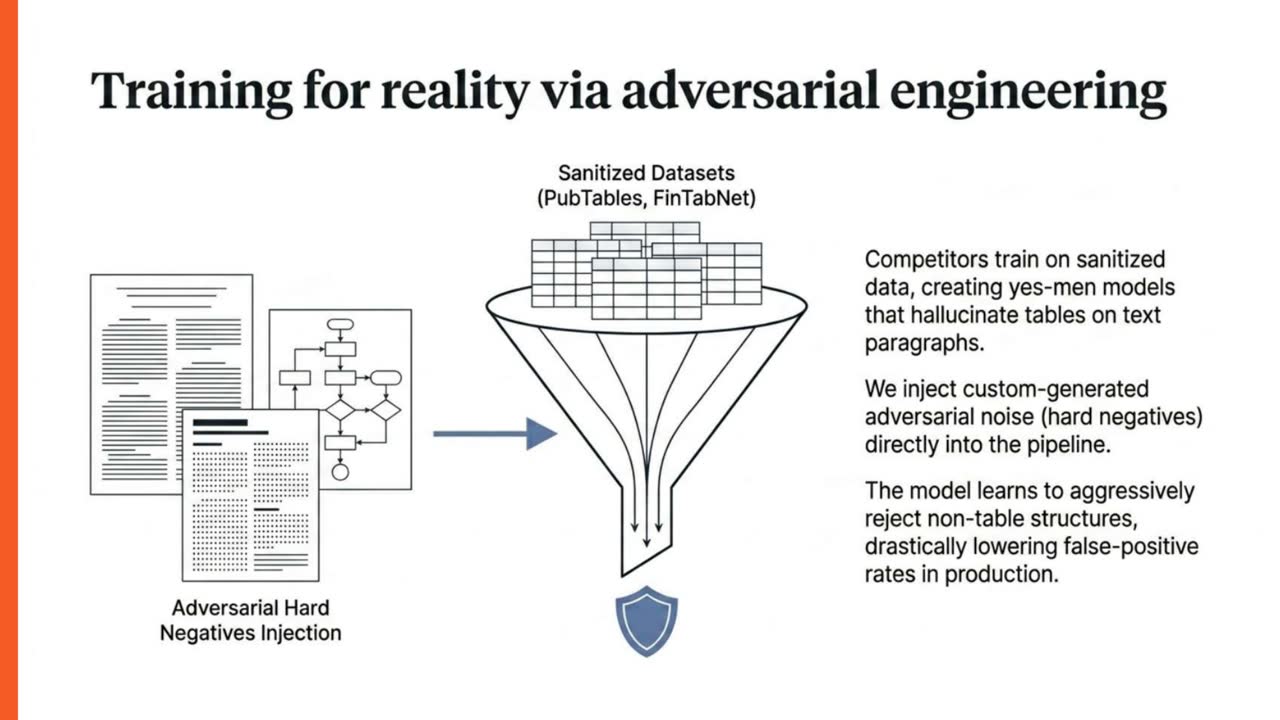
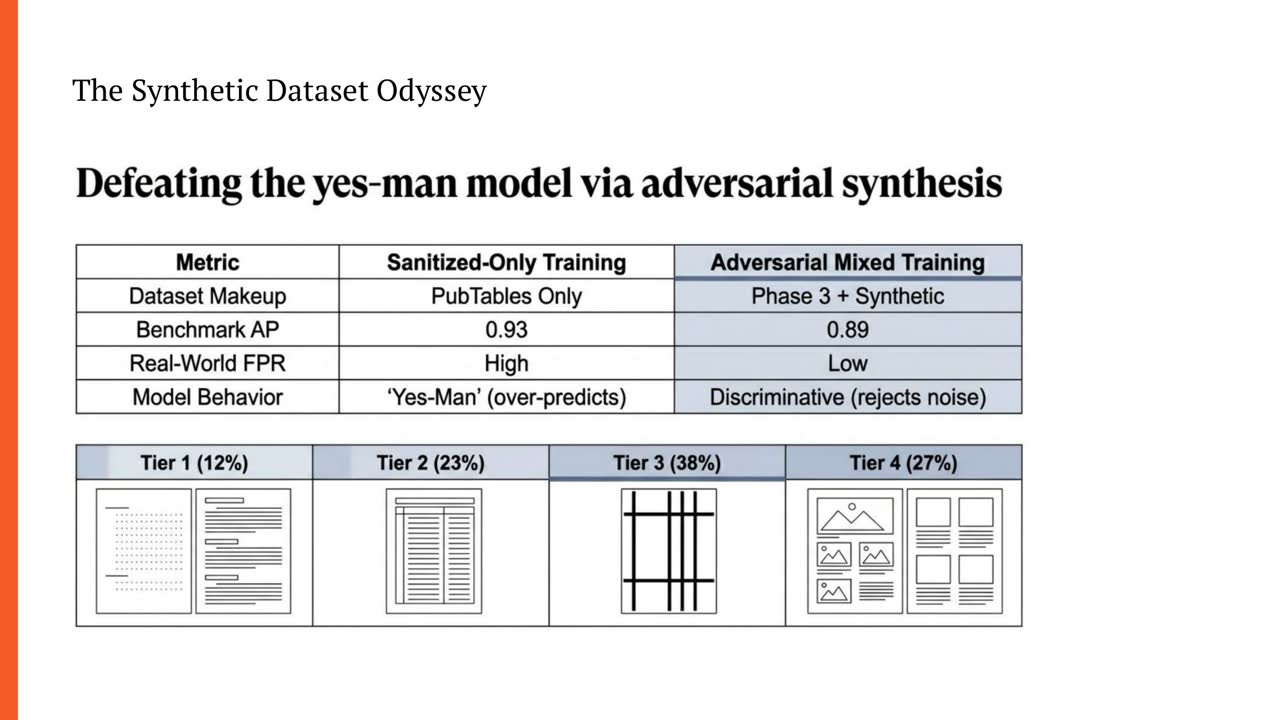
The mixed distribution combines public table corpora with roughly 16,000 synthetic images. A weighted sampler oversamples the minority hard-negative cases, spatial crops translate coordinates so the model cannot memorize page margins, and the lower ResNet is frozen while later layers use differential learning rates. The detector loss falls from 0.61 to 0.17, with AP50 approaching 0.97 on the recorded run.
03 · Data surgery
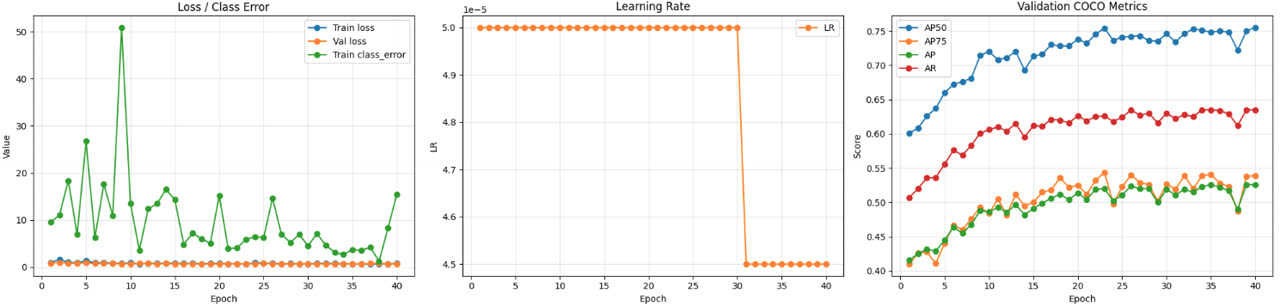
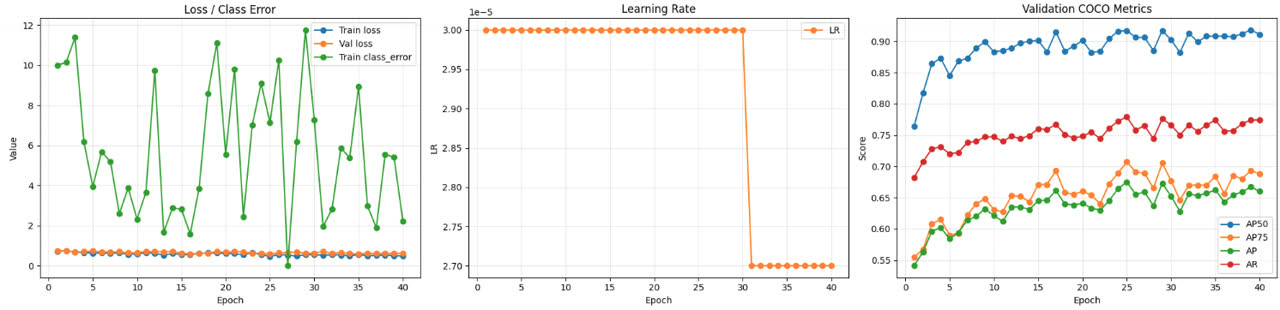
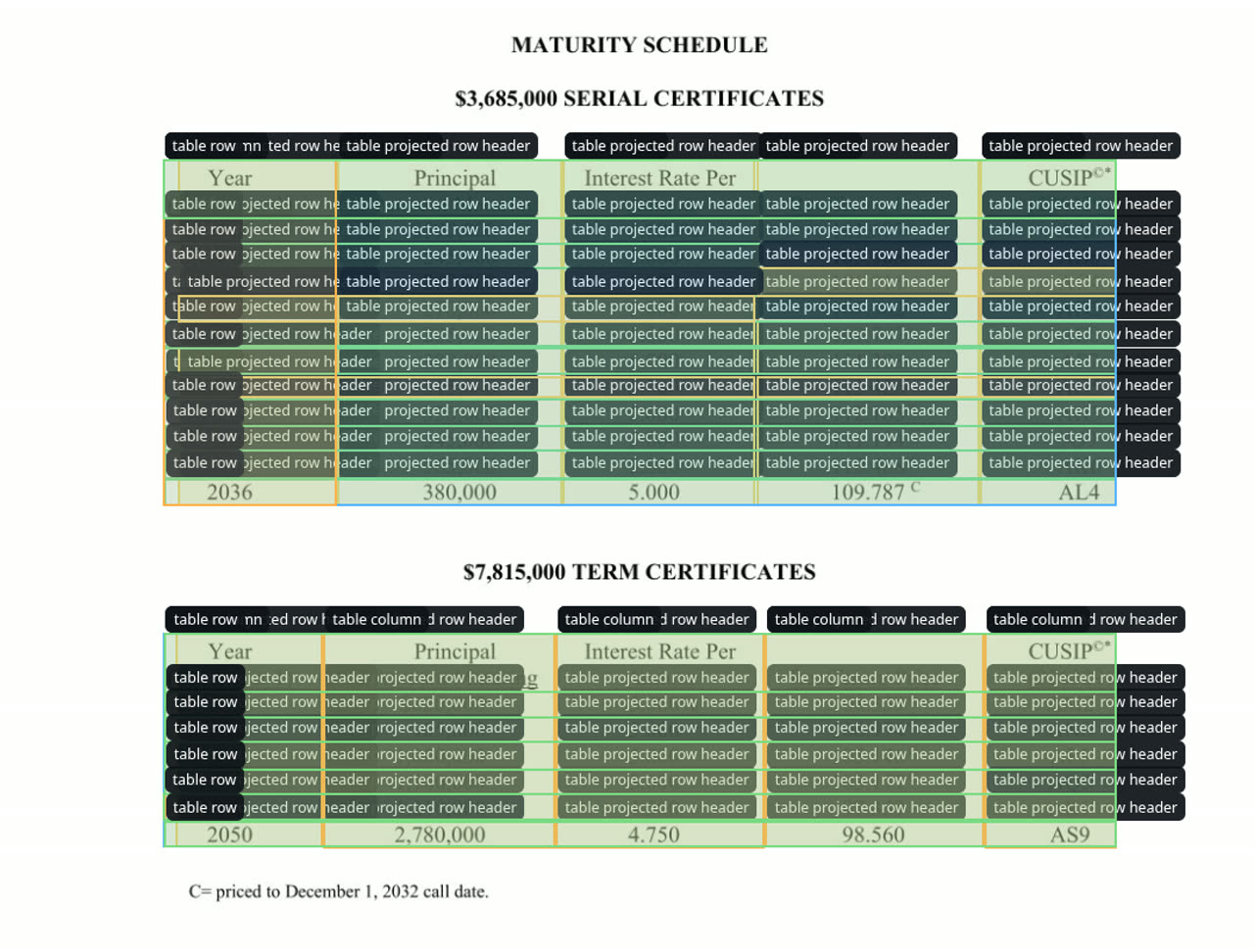
Structure recognition was the hardest part of the project because the dataset looked plausible until the model exposed its contradictions. A validation collapse to AP 0.477 led to an audit of more than sixty pages: the projected-row-header class had been sprayed across real content, column headers were missing, and spanning cells were inconsistent.
Exploding decoder gradients were a symptom. The root cause was annotation geometry that taught the model to see a dense field of phantom row headers.
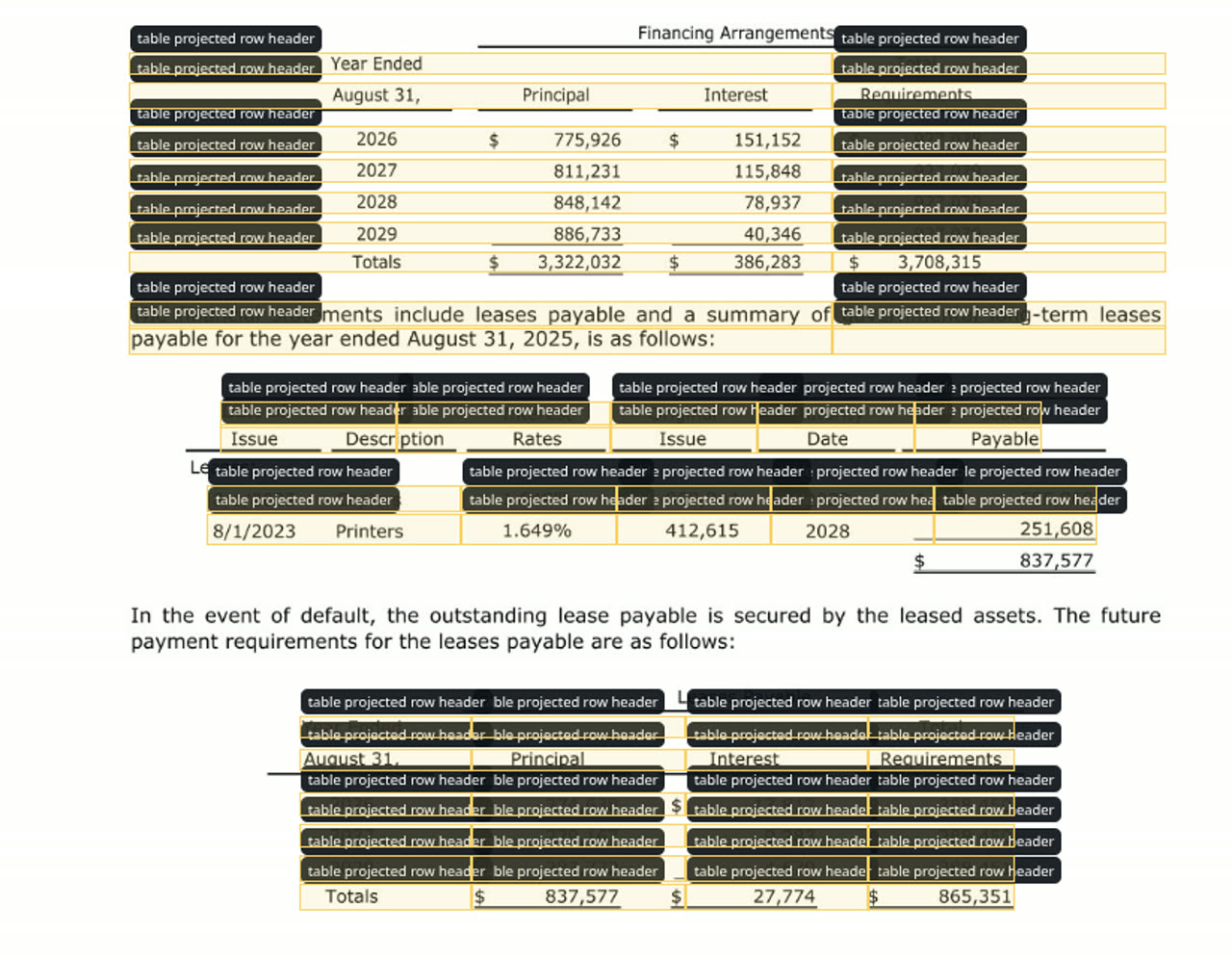
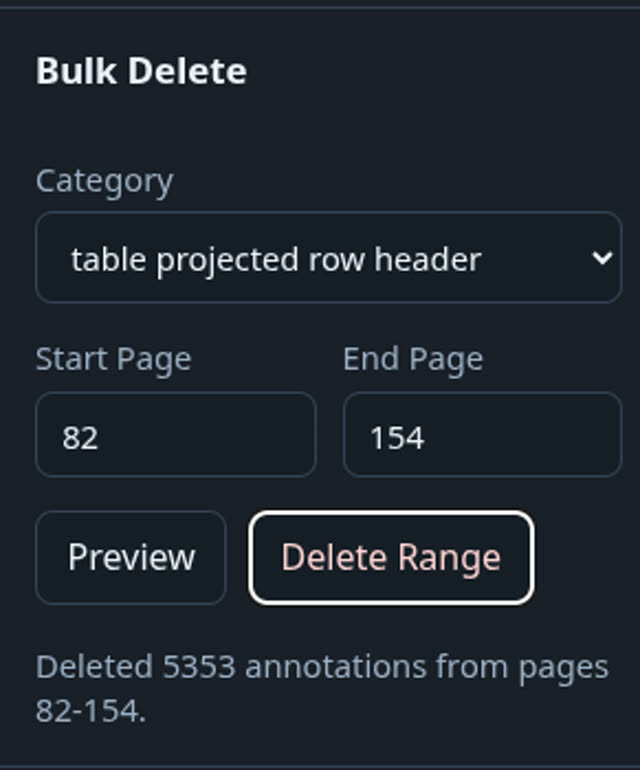
I built an AI-assisted annotation editor with continuous scroll, span repair, row-header conversion, previews, and bulk actions. The repair pass targeted pages 82–154 and removed exactly the incorrect annotations that had been poisoning training.
The ablation was decisive: dropping the corrupted class produced an immediate AP jump. The fix was a change in representation, not a larger model.
04 · Structure recovery
A dense table can generate more competing row-header hypotheses than the TATR decoder's 125-query budget can represent. Instead of asking the model to solve every semantic label at once, I moved the ambiguous decision downstream and made geometry deliberately unambiguous.
Remove projected-row-header from training and map the visual case to ordinary rows.
Force a dense, stable grid that cannot spend queries on phantom structure.
RapidOCR and deterministic heuristics re-flag genuine full-width headers after the grid exists.
This is a recurring design pattern in the system: let learned models handle geometry, then use constrained code where the business meaning must be predictable.
05 · Cell reconstruction
Nearest-center matching breaks as soon as a line crosses a boundary or a cell spans columns. Each OCR box is scored against every candidate cell using overlap, intersection-over-area, and an inside-center bonus, with a normalized-distance fallback and a text-anchored row rebuild when structure boundaries disagree with text.
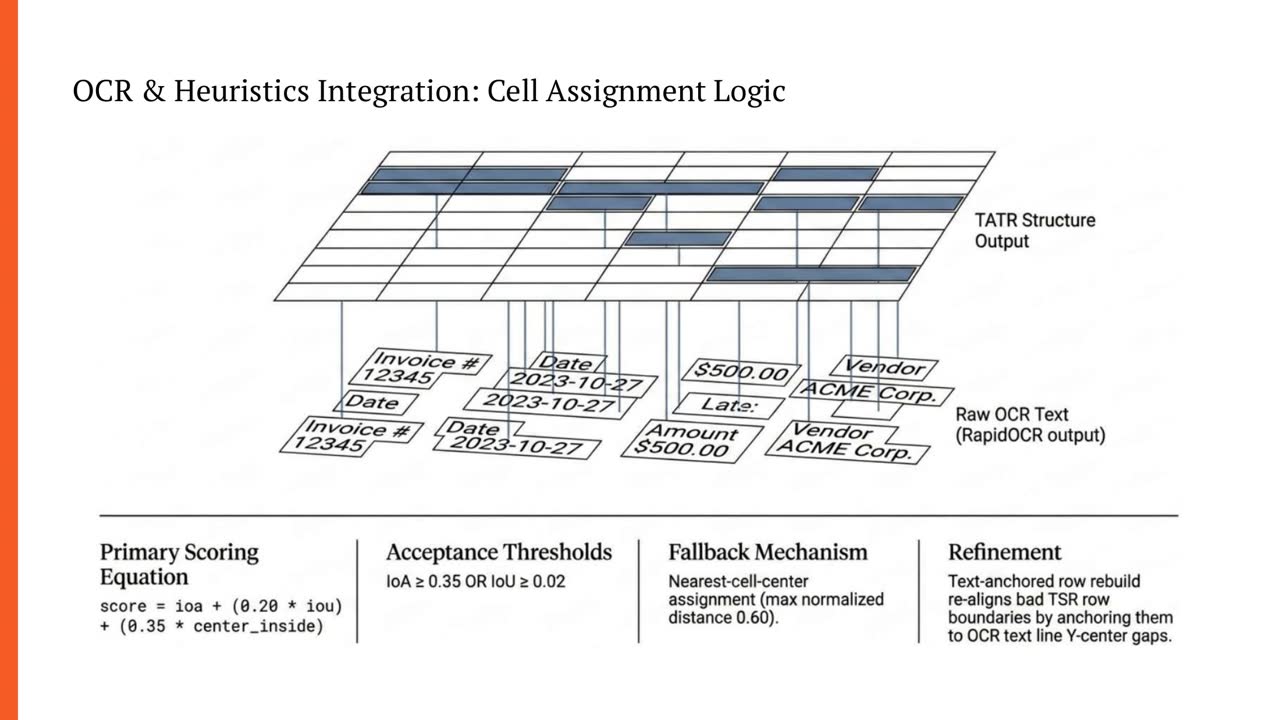
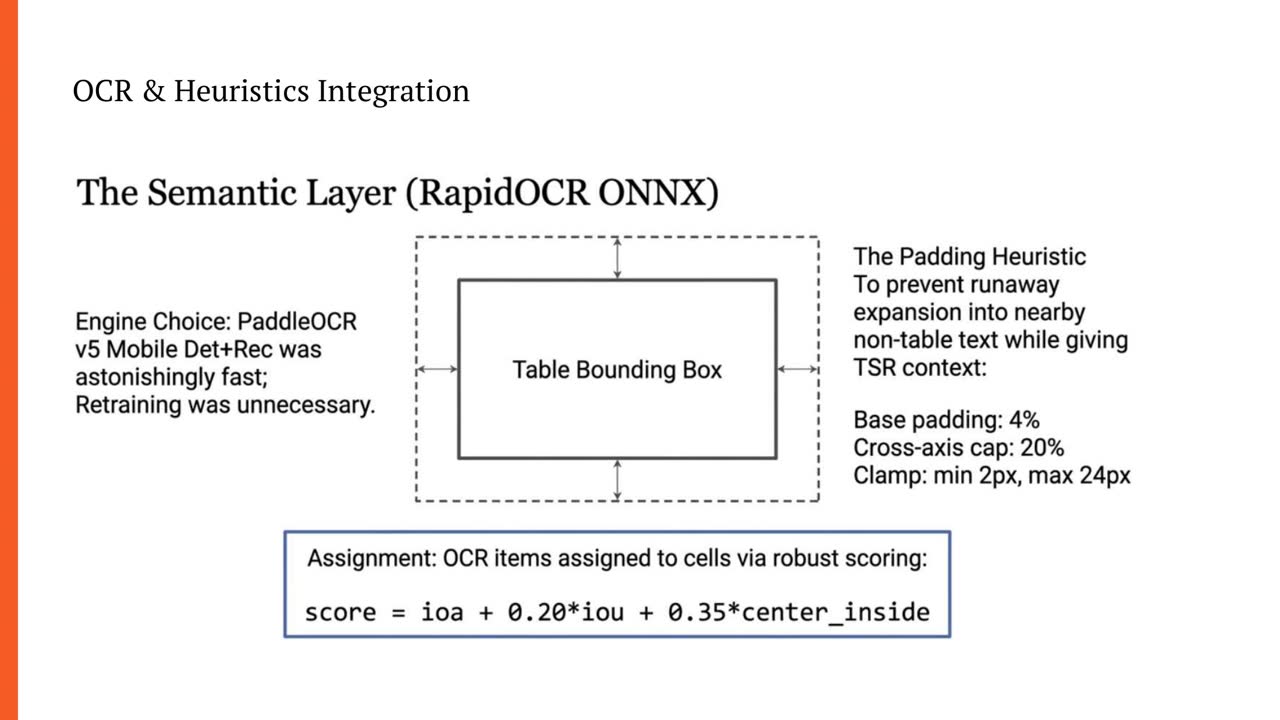
Assignment accepts a candidate at IoA ≥ 0.35 or IoU ≥ 0.02, then falls back to a capped normalized cell-center distance. The row rebuild uses OCR line gaps to re-anchor structure, while production heuristics merge left spanners, prune conflicts, and perform weighted assignment. This keeps the output deterministic even when the model's grid is imperfect.
06 · Auxiliary research track
TableFormerV2 was a separate experiment, not part of the shipped 62.5M-parameter geometry total. I modified its training path to combine OTSL sequence supervision with direct cell-box supervision, while freezing the lower visual representation and adapting the task-specific heads.
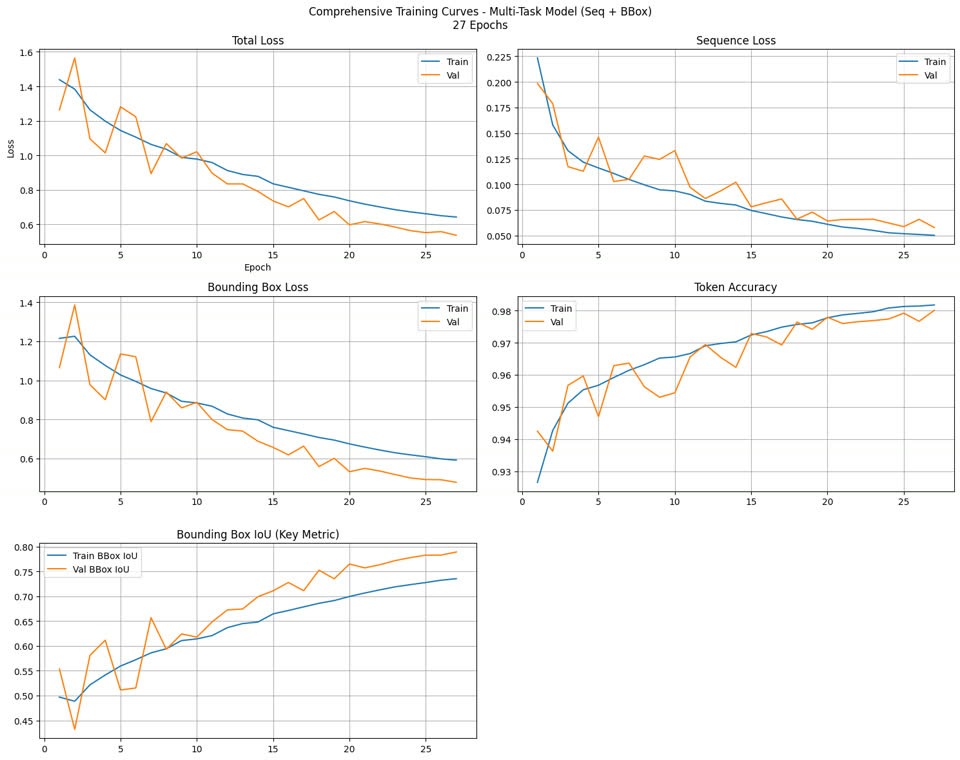
Freezing is visible here as a forward-path decision: frozen modules still transform the image, but their weights do not update. The trainable heads are the part adapted to the annotation policy. This is the same architectural judgment as the detector's surgical freezing, expressed in a different model family.
07 · Product surface
A pipeline that cannot expose its uncertainty pushes the cost onto the user. The studio makes the remaining work legible: select regions, inspect confidence and heatmaps, repair cells, and export an artifact people can continue using.
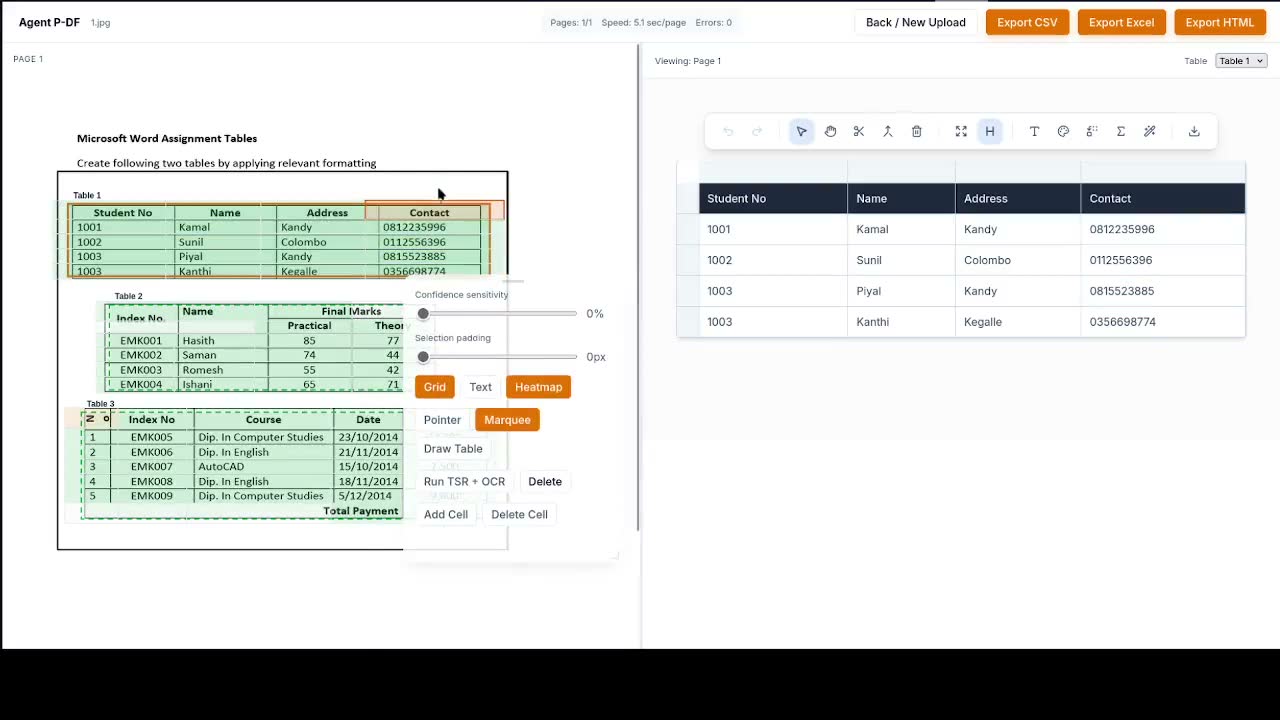
Limitations are part of the interface contract: handwritten tables, heavily degraded scans, and unusual layouts still need review. The system is designed to make that review efficient and precise.
Artifact shelf
The case study is the guided path. These are the complete artifacts for a reviewer who wants to inspect the work as a deliverable.